Contact us
Get Free Advice Online
We will provide you with free advice based on your case details. Fill out the form below to get started!

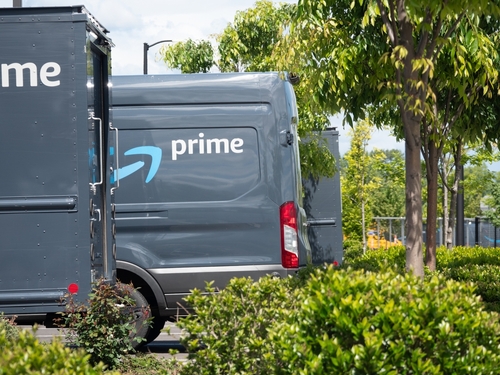
Is Amazon always liable for accidents with their delivery driver? Sometimes, but not automatically. Amazon’s name on a van doesn’t settle who is responsible for a crash. The answer depends on who employed or controlled the driver, who owned the vehicle, which delivery company was running the route, and whose negligence actually caused the collision. In many NYC cases more than one party is responsible, and each one has to be traced through records most people never see.
At Ajlouny Injury Law, our commercial vehicle accident attorneys help pedestrians, cyclists, drivers, and passengers hurt by delivery vehicles identify every party that may be responsible and every insurance policy that may apply. If you were injured in a crash with an Amazon-branded or Amazon-related delivery vehicle, call (516) 535-5555 to talk with our team.
Amazon deliveries in New York are made in several different ways. Some drivers are employed by Amazon directly, many work for Delivery Service Partners (DSPs), which are separate companies that run Amazon-branded routes, and others are Amazon Flex drivers who deliver in personal vehicles as independent contractors. Which one hit you changes who may be liable, so the first job is figuring out who was on the route.
The sources that help sort this out include the police report, the markings on the vehicle, the license plate and VIN, order and tracking information, insurance cards exchanged at the scene, and business names on the van or the driver’s paperwork. When those sources don’t answer the question, the formal discovery process in a lawsuit can.
A logo on the side of a van suggests a connection, but it doesn’t prove who owns the vehicle or who employs the driver. A DSP may operate a branded van that Amazon doesn’t own, and a driver wearing Amazon gear may be on another company’s payroll.
The documents that carry more weight include the contracts between the companies, dispatch and route records, payroll and business records, and the vehicle’s registration and title.
Whatever the corporate structure, the driver is responsible for their own conduct on the road. Delivery schedules and tight routes can push drivers toward the kinds of mistakes that cause crashes:
An employer is generally responsible for the negligence of an employee who is acting within the scope of their job, a rule known as respondeat superior. If the driver was an employee of Amazon or a DSP and the crash happened during deliveries, the employer can be held responsible for the driver’s negligence.
A company can also face a direct claim based on its own conduct, such as negligent hiring, training, or supervision, or failing to maintain its vehicles, but those claims need facts to support them and aren’t assumed in every case.
Companies often say a driver is an independent contractor, and in general a business isn’t responsible for an independent contractor’s negligence. But labels don’t decide the question. Courts look at how the relationship actually worked, including who set the routes and schedules, who supplied the vehicle and equipment, what policies the driver had to follow, and how much the company monitored and directed the work.
The more control a company had over how the work was done, the more likely it is that an agency relationship existed.
Under VTL § 388, the owner of a vehicle is generally liable for the negligence of anyone driving it with the owner’s permission, express or implied. That means a company that owns a delivery van can be responsible even when it didn’t employ the driver.
There are exceptions, though. Federal law, known as the Graves Amendment, can protect companies that are in the business of renting or leasing vehicles from owner liability unless they were themselves negligent. Registration, leasing, rental, and fleet arrangements all need to be verified, because the registered owner, the lessor, and the operator can be three different entities.
Several insurance policies may be in play after a delivery crash, and we don’t assume what any of them cover. The potential sources include:
Policy limits and conditions vary, so we request the actual policies rather than guessing.
Corporate delivery data can be overwritten or deleted under routine retention schedules, which is why timing matters. Evidence worth preserving includes:
Some of this evidence is held by the delivery companies, which means a written preservation demand has to be sent quickly. If you were hurt, call Ajlouny Injury Law at (516) 535-5555 so we can send those demands before the data is gone.
New York’s no-fault system under Article 51 of the Insurance Law provides first-party benefits for medical expenses and a portion of lost earnings, no matter who caused the crash, and the application generally has to be filed within 30 days. Those benefits are separate from a lawsuit against the at-fault parties. Under Insurance Law § 5104, you generally can sue for pain and suffering after a motor vehicle crash only if you have a “serious injury” as defined in § 5102(d), which includes categories such as a fracture, significant disfigurement, or a permanent or significant limitation of use of a body part or function.
Shared fault is handled under CPLR § 1411, which reduces damages by your percentage of fault rather than barring them. Whether your injuries meet the serious-injury standard needs an attorney’s review.
A quick offer from one insurer can cut off claims against everyone else. A broad release can end your rights against parties you didn’t know about, and a policy-limit demand sent to the wrong carrier can waste leverage. Health insurers, Medicaid, and other payers may also have liens that come out of a settlement. Before signing anything, you should know who the responsible parties are and what coverage exists, and an attorney should read the release.
Delivery crashes have layers: the driver, the vehicle owner, the delivery company, and the corporate parent can each be tied to different insurance. At Ajlouny Injury Law, we investigate that chain from the street up, send preservation demands for the corporate data, and handle the insurers so you can concentrate on your recovery. We can’t promise that Amazon will be a defendant in your case or that any recovery is guaranteed, but we’ll give you an honest read on who is responsible and where your claim stands.
Learn more about our work on truck accident claims, and New York car accident claims. Contact Ajlouny Injury Law at (516) 535-5555 today to have our team review your case.
No. Amazon may be liable in some cases, but the relationships between the entities, the control each had over the work, who owned the vehicle, whose negligence caused the crash, and what insurance applies all have to be established. The branding alone doesn’t prove it.
A DSP is generally a separate company from Amazon. That means the DSP may be responsible for its driver, and whether Amazon shares liability depends on the contracts and on how much control Amazon actually exercised over the DSP’s drivers and operations. Each entity’s potential liability has to be evaluated on those facts.
Flex drivers generally work as independent contractors using their own vehicles. Amazon has stated that it provides commercial auto insurance coverage for Flex drivers while they’re making deliveries, but the actual policy terms, limits, and conditions have to be obtained and reviewed. It also matters whether the driver was logged into the app and on a delivery block when the crash happened, who owned the car, and what personal policies apply.
Yes, potentially. Under VTL § 388, an owner is generally responsible for the negligence of a person driving the vehicle with its permission. Exceptions apply, including the federal Graves Amendment for companies that rent or lease vehicles, so the ownership and permission facts need an attorney’s review.