Contact us
Get Free Advice Online
We will provide you with free advice based on your case details. Fill out the form below to get started!

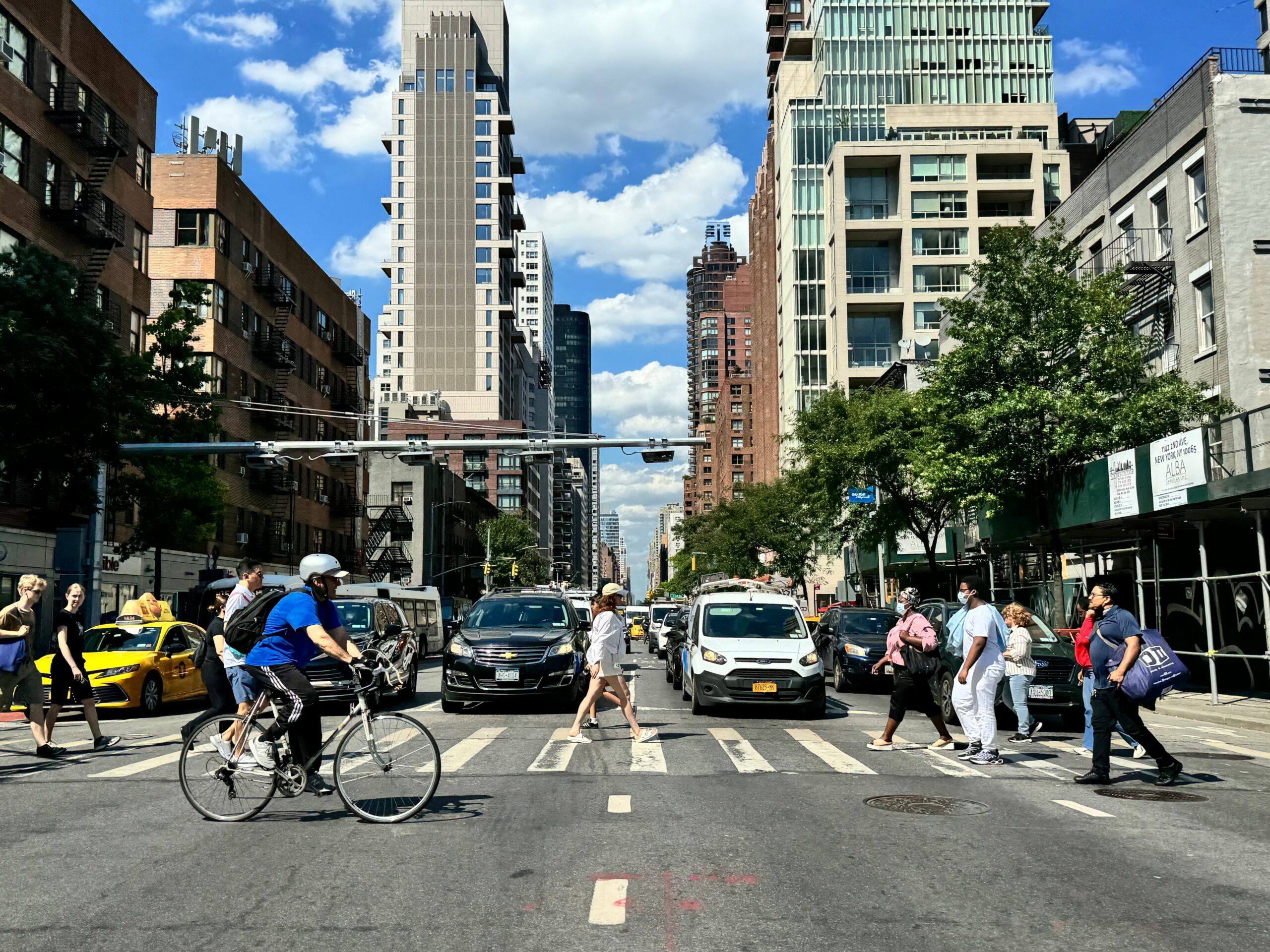
If you were hit by a car while walking in New York City, the driver is often responsible, but liability doesn’t automatically stop there. Depending on how the crash happened, an employer, vehicle owner, contractor, property owner, or even a government entity may share responsibility for your injuries.
At Ajlouny Injury Law, our pedestrian accident lawyers investigate every angle of a pedestrian crash to identify who actually caused it and who can be held accountable. If you were struck by a car in New York City, call (516) 535-5555 to talk with our team about your case.
Liability in a pedestrian crash generally comes down to whether someone breached a duty of care and caused your injuries as a result. That means looking at whether a driver had a duty to yield, whether they breached that duty through a signal violation, speeding, distraction, or another unsafe action, and whether that breach directly caused the collision and your resulting damages.
Traffic signals and right-of-way rules matter, but they don’t automatically decide a case on their own. A pedestrian crossing with the signal still has to prove the driver’s conduct caused the crash, and a driver who had a green light isn’t automatically cleared of responsibility if other factors, like an unsafe turn or a failure to see a visible pedestrian, contributed to the collision. A full investigation of the specific facts is usually necessary before liability can be fairly assessed.
Pedestrian crashes in New York City tend to fall into a handful of recurring scenarios, and each one raises different liability questions.
When a turning vehicle strikes a pedestrian in a marked crosswalk, the investigation often centers on the signal phase at the time of the crash, whether the driver yielded appropriately, sight lines at the intersection, vehicle speed, driver distraction, and when the pedestrian entered the crosswalk relative to the signal. These details can significantly affect how fault is allocated between the parties involved.
A pedestrian struck outside a marked crosswalk may still have a valid claim. New York applies comparative negligence, which means a driver can still bear a share of responsibility if they were speeding, distracted, or failed to react to a visible hazard, even if the pedestrian wasn’t in a designated crossing area. This isn’t a rule that gives drivers a pass to disregard pedestrians outside of crosswalks; it simply means fault gets divided based on each party’s actual conduct.
Crashes involving commercial vehicles raise additional liability questions beyond the driver. Depending on the circumstances, an employer or vehicle owner may bear responsibility, and commercial insurance policies often provide higher coverage limits than a personal auto policy.
For rideshare collisions, whether the driver was logged into the app or actively transporting a passenger at the time of the crash can affect which insurance policy applies. Vehicle maintenance records and questions about whether an employer negligently entrusted a vehicle to an unsafe driver can also become relevant in these cases. Our rideshare accident claims team regularly handles these coverage questions.
Sometimes a crash isn’t caused solely by driver conduct. Poor road design, a construction zone obstruction, an inadequate traffic control plan, or a hazardous property condition near a crosswalk can all contribute to a pedestrian collision. Claims involving a contractor, property owner, or public entity often carry strict and much shorter notice deadlines than an ordinary injury claim, so it’s important to consult an attorney quickly if you suspect one of these parties may be involved.
The steps you take right after a pedestrian crash can protect both your health and your legal rights.
New York’s no-fault system generally requires the insurer of the striking vehicle to cover a pedestrian’s initial medical expenses and a portion of lost income, regardless of who caused the crash. If the striking vehicle can’t be identified or lacked appropriate insurance, a pedestrian may need to look to their own household auto policy or, in some cases, coverage through the Motor Vehicle Accident Indemnification Corporation (MVAIC).
Prompt notice to the appropriate insurer is important, since delays can complicate a no-fault claim.
You can learn more about how these benefits work through the New York DFS no-fault resources.
Because pedestrian crashes often come down to competing accounts of what happened, evidence plays a central role in establishing liability.
Useful evidence can include:
New York follows a pure comparative negligence rule, which means a pedestrian’s compensation can be reduced by their own percentage of fault, but it is not automatically eliminated just because they share some responsibility for the crash. Even a pedestrian who was partially at fault, such as crossing mid-block or being distracted at the time of the crash, may still be entitled to recover a portion of their damages based on the driver’s share of fault. How fault gets divided depends entirely on the specific facts of the crash and the evidence available.
Depending on the severity of the crash, a pedestrian’s claim may involve two categories of losses: no-fault basic economic losses, and additional damages pursued through a liability claim against the at-fault party.
These can include:
Serious pedestrian crashes can result in traumatic brain injuries or other catastrophic harm. Our personal injury attorney team handling brain injury compensation and catastrophic injury claims can help evaluate the full scope of a serious injury and what it may mean for your future.
Ordinary personal injury claims in New York are subject to a statute of limitations, but pedestrian crashes involving a government entity carry much shorter deadlines. If your crash involved an MTA bus, a city-owned vehicle, a traffic signal malfunction, or a public road or sidewalk defect, you are required to file a formal notice of claim within 90 days, well before the general filing deadline would otherwise apply. Then, you must start the actual lawsuit process before a year.
Missing this notice window can permanently bar a claim against a public entity, so it’s important to consult an attorney as soon as possible if a government vehicle or public property may have contributed to your crash.
Pedestrian crashes in New York City are rarely as simple as “driver versus pedestrian.” Video footage, insurance coverage, employer responsibility, and potential government notice requirements can all affect who is actually liable and how much your claim may be worth.
Our team can review the available evidence, identify every party who may share responsibility, and screen your case for any government notice deadlines that may apply.
Speak with Ajlouny Injury Law or call (516) 535-5555 today to discuss your case.
If the driver fled after striking you, contact police immediately and try to preserve any nearby camera footage before it’s overwritten. Depending on the circumstances, you may have options through your own household auto coverage or through MVAIC, which can provide compensation in certain hit-and-run and uninsured vehicle situations. An attorney can help screen your case for which coverage may apply.
Possibly. Under New York’s comparative negligence rule, being distracted at the time of the crash may reduce your compensation, but it does not automatically prevent you from recovering damages if the driver also acted negligently. The driver’s conduct still needs to be fully investigated.
No. A police report is one piece of evidence in a pedestrian case, but it doesn’t determine the outcome of a civil claim on its own. Officers at the scene may not have witnessed the crash directly, and additional evidence like video footage, witness statements, and expert analysis often plays a significant role in establishing what actually happened.