

Contact us
Get Free Advice Online
We will provide you with free advice based on your case details. Fill out the form below to get started!

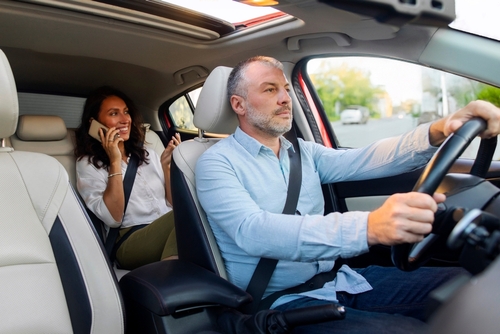
A Queens rideshare accident claim can involve several parties at once, including the rideshare driver, another motorist, a vehicle owner, and multiple insurance policies. Who pays depends on who caused the crash, what the driver was doing in the app, and which rules govern the trip.
Because rideshare trips that begin in New York City are regulated differently from trips elsewhere in the state, Queens claims often require a closer look at the vehicle’s licensing and insurance. You may also need to pursue no-fault benefits and a separate injury claim at the same time.
At Ajlouny Injury Law, our attorneys help people injured in Uber and Lyft crashes throughout Queens and New York City sort out which parties and policies are involved and pursue the compensation they need. Call (516) 535-5555 for a free consultation, available 24/7.
Rideshare crashes rarely involve just one driver and one insurer. Identifying every potentially responsible party is often the first step.
If the rideshare driver was speeding, distracted by the app, making an unsafe turn, or otherwise driving carelessly, the driver may be responsible. Passengers are rarely at fault in these crashes, which can make the driver’s coverage a key source of recovery.
Many rideshare crashes are caused by another motorist. In that case, the other driver, and sometimes the owner of that vehicle, may be responsible. New York law can hold vehicle owners liable for crashes caused by people driving with their permission.
Uber, Lyft, and similar companies arrange insurance for trips taken through their platforms, but the coverage that applies depends on the driver’s status and where the trip began. Rideshare drivers are generally treated as independent contractors, so claims typically focus on the available insurance rather than the company’s direct liability.
Outside New York City, state law ties coverage to what the driver was doing at the time. According to the New York DFS rideshare insurance FAQ, coverage requirements include:
App data showing whether the driver was logged in, en route, or carrying a passenger can determine which coverage applies.
New York’s rideshare law, found in Vehicle and Traffic Law Article 44-B, doesn’t apply to every trip in the state.
According to DFS, Article 44-B doesn’t apply to prearranged trips that originate in New York City. A rideshare vehicle picking up a passenger in Queens must comply with other state and New York City laws, including the rules of the NYC Taxi and Limousine Commission, which licenses and regulates for-hire vehicles in the city and sets its own insurance requirements.
A trip that begins outside the city and ends in Queens, however, may still fall under Article 44-B. Because the rules depend on where the trip started, identifying the correct framework early is important.
Strong evidence helps establish fault and identify coverage. If you’re able, preserve:
Rideshare companies keep app data that can show the driver’s status and speed, so contacting an attorney quickly can help preserve it.
New York is a no-fault state. After a crash, no-fault insurance generally pays basic economic losses, such as medical bills and a portion of lost wages, up to the policy’s limits regardless of who caused the crash. Passengers often receive no-fault benefits through the insurance on the vehicle they were riding in, while pedestrians and cyclists may claim through the vehicle that struck them. No-fault applications have strict deadlines, so file promptly.
To pursue a claim against an at-fault driver for pain and suffering, you generally must meet New York’s serious injury threshold, such as a fracture, significant limitation of a body function, or an injury that prevents normal activities for an extended period. If the at-fault driver has little or no insurance, uninsured or supplemental underinsured motorist coverage may also apply. Our New York car accident lawyers can help coordinate these claims.
New York follows pure comparative negligence. If you share some fault, your compensation is reduced by your percentage of responsibility, but you can still recover even if you were mostly at fault. In multi-vehicle rideshare crashes, fault may be divided among several drivers, which can affect how much each party’s insurer pays. This is especially relevant for pedestrians and motorcycle riders.
Depending on your case, you may recover medical expenses beyond no-fault benefits, lost income and earning capacity, pain and suffering, and loss of enjoyment of life. Most New York personal injury lawsuits must be filed within three years, but claims involving city vehicles or property can require a notice of claim within 90 days.
Ajlouny Injury Law was founded by Paul Ajlouny, who began his career in medicine before becoming an attorney and has secured more than $150 million in settlements for injured clients. That medical background helps our team understand and document serious injuries, and insurers know we’re prepared to go to trial if needed. With offices in Queens, Brooklyn, and Manhattan, we’re close by when you need us.
No outcome can be guaranteed, but we’ll help you identify every source of recovery. Contact Ajlouny Injury Law at (516) 535-5555 for a free consultation.
Claims usually focus on the insurance associated with the trip rather than the company’s direct liability, since drivers are generally independent contractors. The coverage available depends on where the trip began and the driver’s app status.
You may have a claim against the other driver and possibly the vehicle’s owner. If that driver lacks sufficient insurance, uninsured or underinsured motorist coverage may help.
Generally, yes. Passengers may receive no-fault benefits and may pursue liability claims against the at-fault driver. Because Queens trips are typically regulated by the TLC rather than Article 44-B, the specific coverage depends on the vehicle’s insurance.
